


A flexible British education pathway from Year 1 to Year 11
Live online teaching • IXL personalised learning • Independent study
Britannia International Academy's flexible National Curriculum of England provides students with a structured yet adaptable online education from Key Stage 1 through Key Stage 4.
A flexible approach to British education
Structure where it matters. Flexibility where families need it.
Not every student learns in the same way, follows the same daily schedule or needs the same level of classroom instruction. Britannia's flexible National Curriculum of England has been designed to provide the structure of a British curriculum while preserving the flexibility that makes online education accessible to families around the world.
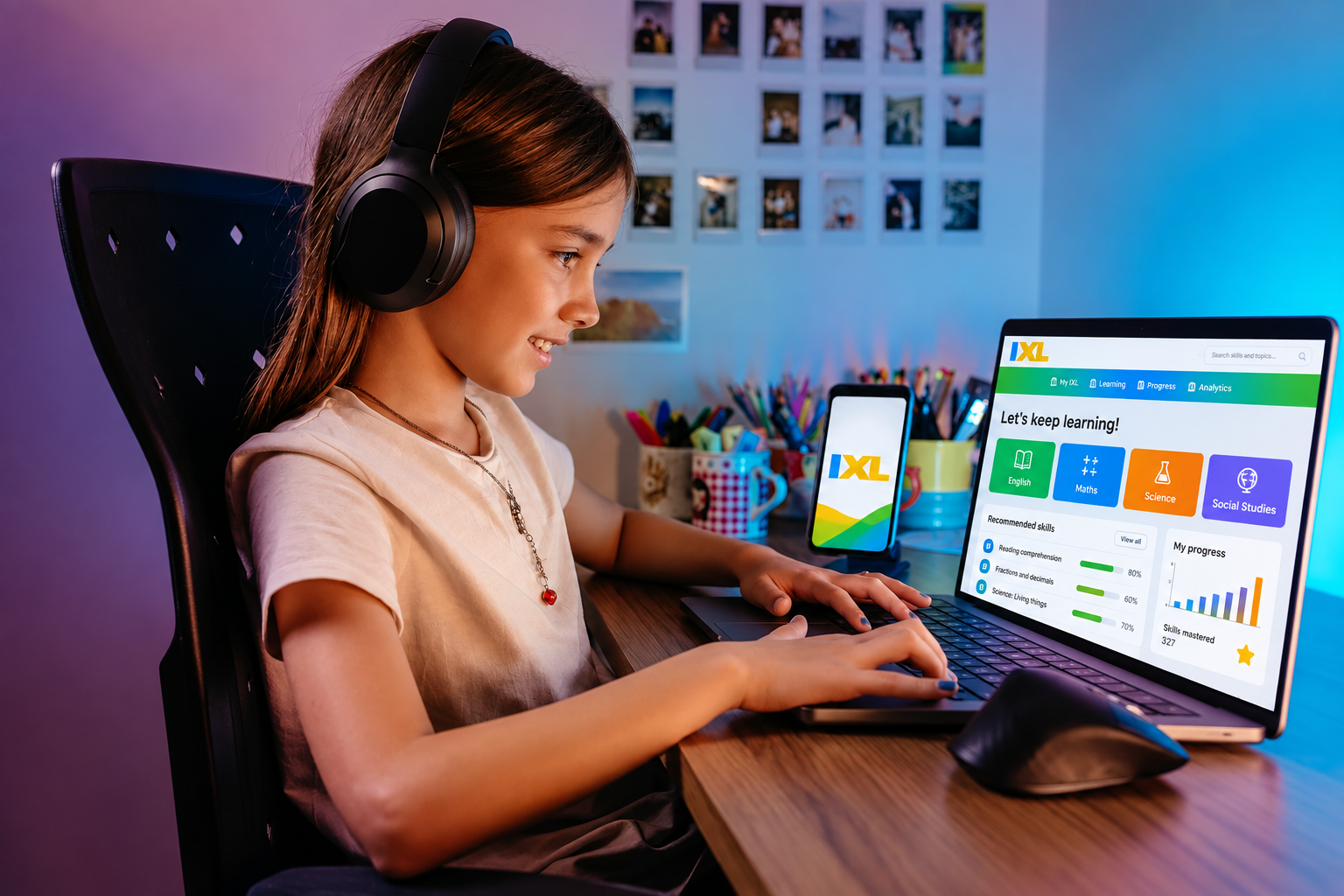
Students participate in scheduled live lessons with Britannia teachers and continue their learning independently through assignments, reading, revision and personalised IXL practice. The result is a programme that combines teacher guidance, independent learning and digital education within one coherent pathway.

Based on the National Curriculum in England
Britannia's flexible programme is structured around the National Curriculum in England, providing a clear framework for learning throughout the primary and secondary years. The National Curriculum establishes programmes of study across the different key stages and provides a framework for developing students' knowledge, understanding, and skills. Britannia uses this framework to guide curriculum planning while adapting delivery to the needs of an international, fully online learning community.

From Year 1 to Year 11: one continuous learning journey
The programme follows the familiar English year-group and Key Stage structure, guiding every learner through each stage of academic development.
Key Stage 1 (Years 1–2 | Ages 5–7)
Building strong foundations in literacy, numeracy, scientific understanding, and core learning skills through engaging instruction and guided practice.
Key Stage 2 (Years 3–6 | Ages 7–11)
Developing knowledge, confidence, reasoning, and greater independence across the British curriculum as learners prepare for secondary education.
Key Stage 3 (Years 7–9 | Ages 11–14)
Building deeper subject knowledge and analytical thinking skills to prepare students thoroughly for upper-secondary study and future qualification pathways.
Key Stage 4 (Years 10–11 | Ages 14–16)
Consolidating essential knowledge and skills while preparing students for progression into Level 2 qualifications and subsequent Level 3 study pathways.
How learning works at Britannia
Live teaching and independent learning work together. The Flexible National Curriculum is not designed around live lessons alone; students learn through a balanced combination of teacher-led instruction and structured independent study.

Teacher-led online lessons
Students attend scheduled live lessons with Britannia teachers, where new concepts are introduced, explained, and discussed interactively.
Curriculum-based study
Students work through learning activities, assignments, and curriculum resources directly connected to the academic topics being studied.
IXL personalised learning and consolidation
IXL provides targeted practice to strengthen curriculum skills independently, alongside reading, assignments, and revision that consolidate understanding.
Academic assessment and feedback
Teachers monitor progress through classwork and periodic assessments, providing detailed monthly reporting to celebrate achievements and highlight growth areas.
Personalised learning with IXL: practice, progress, master
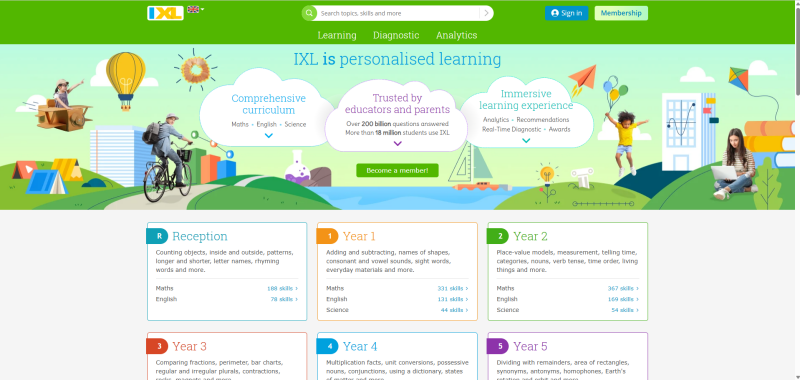
IXL forms a cornerstone of Britannia's Flexible National Curriculum learning environment. Rather than replacing teachers, IXL works seamlessly alongside live teaching to give students dedicated space to practise independently, close learning gaps, and receive real-time feedback.
Personalised practice
Students work on targeted skills precisely matched to their year group and specific learning needs, allowing them to consolidate knowledge at an individual pace.
Immediate feedback
Interactive exercises provide real-time guidance and explanations as students work, helping reinforce core concepts and address misunderstandings on the spot.
Independent learning
Learners continue practising beyond scheduled live Britannia lessons, empowering them to take ownership of their academic journey and build disciplined study habits.
Progress insights and skill development
Consistent practice solidifies key academic skills while digital learning analytics deliver clear diagnostic insights into areas of strength and topics requiring further support.
Core live learning
Britannia's live teaching programme provides students with regular structured instruction across core areas of learning, offering interactive guidance and enrichment throughout the academic year.

English
Students develop essential reading, writing, grammar, vocabulary, comprehension, and communication skills appropriate to their stage of education.
Mathematics
Students build mathematical fluency, reasoning, and problem-solving skills across key areas such as number, arithmetic, measurement, geometry, statistics, and algebra as appropriate to their year group.
Science
Students develop scientific knowledge, conceptual understanding, and practical enquiry skills across age-appropriate topics in biology, chemistry, and physics.
Global citizenship and enrichment
Students explore cultures, communities, global issues, and personal responsibility in an interconnected world, alongside optional clubs, additional classes, and enrichment activities.
Designed for flexible learning
The programme has been developed for families seeking greater flexibility without abandoning the structure and progression of a British education.

100% online accessibility
Students can participate from wherever they are based, allowing your family's education to travel with you without missing a step.
Scheduled live lessons
Regular live teaching provides meaningful structure and active teacher-student interaction across core subject areas.
Independent study and digital practice
Students learn to take increasing responsibility for their education, while IXL supports continuous, targeted skills practice outside live lessons.
Recorded learning and global community
Where available, lesson recordings allow students to revisit teaching to consolidate understanding alongside classmates from diverse international backgrounds.
Assessment and academic progress
Three assessment points across the year
Assessment is an integral part of Britannia International Academy's Flexible National Curriculum of England. Students complete three formal Interim Assessment periods during each academic year, providing teachers, students, and parents with a clear picture of academic progress.
Autumn term interim assessment (December): Evaluates students' knowledge, understanding, and skills developed during the first term.
Spring term interim assessment (March / April): Reviews ongoing progress and helps identify key areas for consolidation.
Summer term interim assessment (June / July): Assesses cumulative progress to contribute to the end-of-year academic evaluation and progression.
How students are assessed
Britannia's Interim Assessments evaluate both knowledge recall and practical application. Tasks may include objective questions, written responses, problem-solving activities, and subject-specific projects suitable for the learner's year group. Assessment outcomes are reviewed alongside live lesson engagement, coursework, independent practice, and continuous teacher input.
Transparent progress reporting
Through our parent and student portals, families receive regular updates detailing attainment and constructive areas for growth. This continuous cycle ensures academic progress is tracked throughout the year rather than relying on a high-stakes end-of-year examination.
Key stage completion assessments: recognising milestone progress
Year 6 — end of Key Stage 2
In addition to Britannia’s three annual interim assessment periods, students reaching the end of Year 6 sit an Oxford standardised assessment to provide an independent measure of attainment at the completion of Key Stage 2.
Progression pathway:
Year 6 → Oxford standardised assessment → Completion of Key Stage 2 → Progression to Year 7
Following assessment, Britannia issues an End-of-Year Academic Report and Progress Certificate confirming each student's successful completion and readiness for secondary education.
Year 9 — end of Key Stage 3
Students completing Year 9 sit an Oxford standardised assessment to provide an independent measure of attainment at the completion of Key Stage 3 before advancing to upper secondary.
Progression pathway:
Year 9 → Oxford standardised assessment → Completion of Key Stage 3 → Progression to Year 10
These assessments provide a benchmark at two vital transition points in the British education pathway, complementing Britannia’s internal reporting and IXL skill monitoring.
Three routes. One clear direction.
Explore clear progression routes designed to guide students from Year 11 through specialist accredited qualifications directly into university and higher education.
Direct University Entry
Year 11
↓
Level 2 Functional Skills (English + Mathematics)
↓
NCC Education L3IFDHES
↓
University
Business
Year 11
↓
Level 2 Diploma in Business
↓
Level 3 Extended Diploma in Business
↓
Higher education
Computing
Year 11
↓
Level 2 Diploma in Computing
↓
Level 3 Diploma in Computing
↓
Higher education
Why choose the Flexible National Curriculum?
A structured British education designed with the modern flexibility global families need to thrive.
National Curriculum framework
Learning structured around the National Curriculum in England ensures continuous academic standards, clear milestones, and international comparability across all key stages.
Live online teaching
Regular teacher-led lessons provide interactive guidance, clear explanations, and rich peer discussion to inspire confidence in every learner.
IXL personalised learning
Independent digital practice supports skills development and consolidation, using adaptive diagnostics and immediate feedback to target each student's needs.
Flexible study
A balanced combination of scheduled live teaching and self-paced independent learning allows families to adapt school around their unique lifestyle.
Learn flexibly, progress confidently
A British education pathway designed for today's international learner. From the foundational years of Year 1 through to preparatory study for post-16 qualifications after Year 11, Britannia International Academy®'s Flexible National Curriculum of England seamlessly combines teacher-led online education, personalised IXL learning, and structured independent study.
Catering to students across Key Stages 1 to 4 (ages 5–16), our 100% online model allows young learners to study from wherever they are in the world. Children remain closely connected to their teachers, their peers, and their future academic milestones while establishing a robust foundation for lifelong educational success.